Applying for a Schengen visa can be exciting, but it can be a headache sometimes. The last thing anyone needs is to see their Schengen visa rejected at the last moment, whether you are planning a vacation or a business trip.
According to the European Commission’s data of 2024, the global Schengen visa rejection rate was 14.8% which implies almost 1 in 7 applicants faced refusal. To increase your chances when replying, it is important to understand why rejections happen and how to make sure to avoid them when reapplying for a Schengen visa.
A Schengen visa is a short-stay visa that allows non-EU nationals, including UK residents, to travel between 29 European countries, formally known as the Schengen Area, without border checks. Subsequently, the visa is valid for tourism, business, or other reasons for a short term and allows one to stay up to 90 days within any 180 days.
The Schengen area covers 29 countries without border controls between them. These countries are Austria, Belgium, Bulgaria, the Czech Republic, Croatia, Denmark, Estonia, Finland, France, Germany, Greece, Hungary, Iceland, Italy, Latvia, Liechtenstein, Lithuania, Luxembourg, Malta, the Netherlands, Norway, Poland, Portugal, Romania, Slovakia, Slovenia, Spain, Sweden, and Switzerland. These countries apply the common visa policy for short-stay visas.
In this article, we will look at the common reasons Schengen visas are denied and what UK residents can do if their visa is rejected, and Schengen visa help tips for a successful reapplication.
[APT]
When your Schengen visa is rejected, understand the reason behind the rejection and plan accordingly. The first thing you should know is that you will receive a formal notice of refusal stating the reason for the rejection. Understanding the reason your application went wrong is the first step toward a successful reapplication.
Remember, a visa rejection is not the end of the world. You can appeal the decision if you believe it was unfairly denied or reapply with corrections. However, a Schengen visa appeal does not guarantee approval, so preparing the right new application with all necessary details and documentation is necessary.
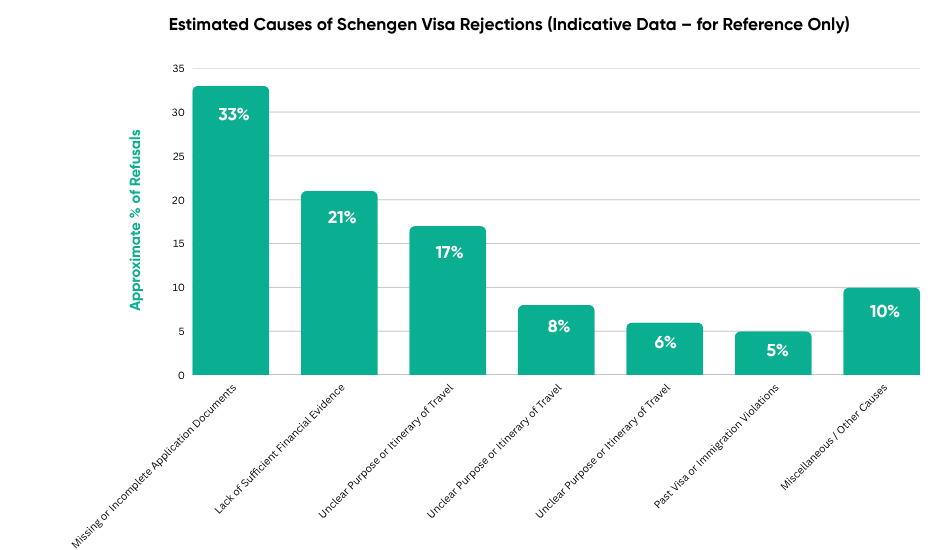
There are common reasons for getting a Schengen visa rejected, and knowing the basic reasons can help you prepare the best application. Here are a few of the reasons stated below:
It is a major common reason for a Schengen visa rejection. Continuous inconsistencies, missing documents, and errors in applications can lead to immediate rejection. Ensure your airline tickets, accommodations receipt, and travel insurance have the same start and end dates
When applying for a Schengen visa, it is necessary to show that you can financially support yourself during your stay. It is mandatory to show necessary funds, or else your application will be rejected. Authorities from Schengen visas will look for bank statements and pay slips.
When applying for a Schengen visa, the passport validity must be at least three months after your expected date of departure from the Schengen area. It depends on the type of visa you are holding. For instance, if you have a multiple-entry visa, the expiry date should be at least three months after you depart from your last country. Additionally, it is necessary for your passport to have been issued within the past 10 years.
An invalid travel insurance policy plays a major role in the rejection of a Schengen visa. One of the Schengen visa requirements is that travelers must obtain Schengen travel insurance meeting certain criteria set by the Schengen countries. For instance, a minimum amount of €30000 is required in emergency medical coverage to cover your entire duration of your stay. It is very likely that your Schengen visa rejection, to your not meeting the Schengen visa insurance requirements.
If you think your Schengen visa was rejected unfairly, make sure to file an appeal. Every country has its own process on how to appeal, but here is the general overview you need:
If you have decided to reapply for a Schengen visa, make sure to prepare a flawless application with no mistakes. You can reapply after addressing the reasons for rejection. Here are the steps for you to reapply and improve the chance of success with the proper SCHENGEN COUNTRIES:
If you are reapplying for a Schengen visa, make sure to address the initial rejection and update all the documents in accordance with the Schengen rules.
It is necessary to provide the necessary details without any falsified or misleading information. Visa authorities check the documents and the information provided with the car, and any wrong information can result in Schengen visa rejection. It includes travel purposes and a consistent documentation process.
Some embassies organise interviews for UK residents reapplying for Schengen visa. Therefore, it is necessary to keep some pointers to remember as follows:
Once you have submitted your visa application, the final step is to track the progress of your Schengen visa. Moreover, this helps you stay informed about the current status of your application and when you can expect a decision.
Need any help reapplying? Connect with our visa experts today! CALL US NOW!
Reapplying for a Schengen visa can be scary if you have already dealt with rejection. Here are some important pointers to keep in mind to increase your chance of getting approved this time, few are as follows:
After a rejection, it is necessary to wait for a week, address the issue, but make sure not to delay the application too long. It is ideal to apply for at least 30 days, ensuring you have fixed all the issues mentioned in the rejection.
Visa rejections are common due to minor errors or inconsistencies. Ensure your application is filled out with all the latest documents and is presentable. For any assistance, contact SCHENGEN COUNTRIES.
The guidelines for a Schengen visa are precise; therefore, make sure to follow the instructions from the required documentation to the passport-sized photos.
Visa officers ensure that UK residents visiting the Schengen area have genuine intentions and will return home. To prove this, provide the necessary details, some are as follows:
Provide necessary documents such as employment status, ongoing salary, etc.
If you’re a UK resident and travelled abroad and returned without overstaying, it helps build credibility.
If you have ownership of any property in your home country, it helps the case and shows the ties to your country of residence.
In conclusion, facing a Schengen visa rejection can be painful, but it’s not the end of the world. You can improve your approval chances by understanding the reasons and by addressing those issues, and thereby preparing a flawless application with SCHENGEN COUNTRIES.
Many travelers with Schengen visa rejections have obtained their Schengen visas successfully after learning from their mistakes and following the guidelines set by the Schengen visa authorities. It is important to remember that the key to securing a Schengen visa is to pay attention to details with transparency and thorough documentation.
Take it as a learning opportunity and experience Europe’s finest destinations with confidence.
To get a Schengen visa easily, you need:
1. Visa application form completed
2. Passport-sized photo
3. Travel itinerary
4. Proof of accommodation
5. Travel medical insurance
6. Proof of financial stability
7. Visa fee payment receipt
Some common visa rejection reasons might be due to:
1. Incomplete documentation
2. Violation of rules
3. Insufficient travel insurance
4. Unclear purpose of travel
5. Expired or invalid passport
6. Insufficient funds
7. Visa interview gone wrong
Visa rejections are common, and they can be resolved with a few simple steps. Some are as follows:
1- Understand the reason for rejection
2- Decide between appeal or reapply
3- Strengthen your new application
4- Avoid common mistakes such as incomplete forms, dishonesty about previous rejections, and weak documentation.
5- Take professional assistance or contact SCHENGEN COUNTRIES.
Although you can apply right away after rejection, it is recommended to wait at least 1-2 weeks before you reapply and make sure you have fixed all the concerns.
Your cover letter should entail the reason for rejection, how you have addressed the issue, and ensure that your new application is stronger.